
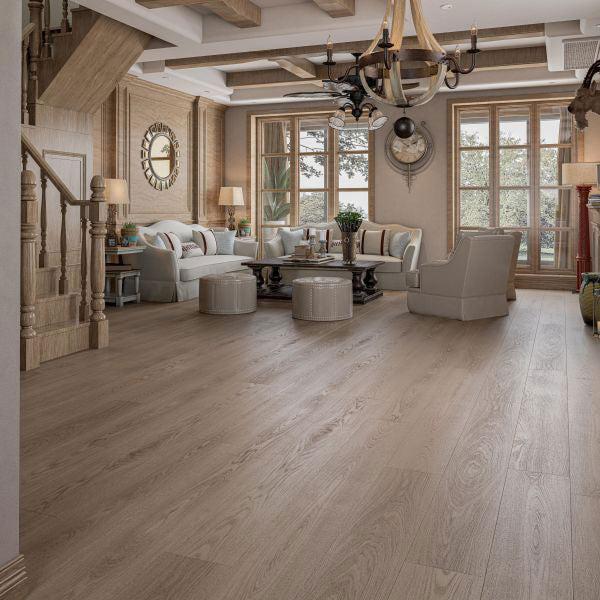
How to Care for Your Luxury Vinyl Plank Floors
Keep luxury vinyl plank clean by sweeping or vacuuming daily, damp mopping with a pH-neutral cleaner, and skipping steam mops, vinegar, and abrasive scrub pads. That combination handles the grit and spills LVP sees every week without touching the wear layer that protects the plank underneath.
Fall changes how often that routine needs to happen. Yard cleanup means more trips in and out of the house, and wet leaves and mud track in more grit in October than most rooms see in a normal month. A floor that only needed a quick sweep twice a week in July can pick up a full layer of grit in two or three days once leaf season starts.
Sweep or Vacuum Every Day During Fall Cleanup
Grit ground into the surface is what actually dulls LVP over time, not age. Sand and small stones tracked in on shoes act like fine sandpaper against the wear layer every time someone walks across it, and that wear shows up first in hallways and doorways.
A broom, dust mop, or vacuum without a rotating beater bar clears loose dirt without scratching the finish. Beater bars are built for carpet fiber, and running one across LVP grinds grit into the surface instead of lifting it away. If your vacuum only has one setting, switch to the hard-floor attachment or skip it in favor of a dust mop during the weeks yard work is in full swing.
Damp Mop With a pH-Neutral Cleaner
Once a week, or more often with heavy fall traffic, go over the floor with a damp microfiber mop and a cleaner made for vinyl flooring. COREtec’s own care guide recommends its Encore cleaner for this reason and specifically warns against anything with detergent, wax, citrus, or vinegar in it, since those ingredients dull the finish or leave a residue that attracts more dirt.
Wring the mop out well before each pass. LVP is waterproof at the seams, but standing water that sits on the surface too long can still seep into the edges and affect the adhesive underneath over time.
Skip the Steam Mop, Even Though It Feels More Thorough
Steam mops are built for tile and sealed hardwood, not LVP. Steam is pressurized heat and moisture, and that combination can warp planks, break down the adhesive, or delaminate the wear layer over one season of regular use. COREtec’s care guidelines tell owners to stay away from steam mops unless a specific product line states otherwise, and most other major LVP manufacturers, including Shaw and Armstrong, carry the same restriction.
This isn’t a minor footnote. Steam damage typically falls outside what a manufacturer’s warranty will cover, so a floor that would have been repaired or replaced under warranty ends up being an out-of-pocket problem instead.
Use Mats and Felt Pads to Cut Down on Grit Before It Reaches the Floor
A four-foot mat at every entrance catches the bulk of the mud and grit before it ever reaches the plank, which matters most during the weeks of raking, mowing, and gutter cleaning that fall brings. Shake mats out or run a vacuum over them a few times a week, since a saturated mat just transfers dirt to shoes instead of catching it.
Felt pads under furniture legs prevent the kind of small scratches that build up from chairs sliding in and out of a dining set or a couch shifting slightly every time someone sits down.
When Your LVP Needs More Than Care
If a plank is chipped, a seam has lifted, or a section near an entryway has visible scratching that mopping won’t fix, patching one area rarely blends in with the rest of the room. Browse our luxury vinyl plank options to see current styles, or check our installation services page for what a full or partial replacement involves.
If you’re not sure whether your floor needs care or replacement, get an estimate and we’ll tell you honestly which one it is.